

THE LAST PARTY:
A State Of Uncertainty
By Eric Hehr
Shot in 1992 during the contested presidential election between George H.W. Bush and Bill Clinton, THE LAST PARTY feels uncannily auspicious from the retrospective lens of 2020. Directed by Mark Benjamin and Marc Levin, the documentary follows a young Robert Downey Jr. traversing a polarized America, navigating the waters of early nineties sociopolitical issues and their subsequent weaponization in lieu of the impending election.

Although much has changed since its release, THE LAST PARTY’s depiction of how much has stayed the same is what gives it such an indelible relevance. The political issues and civil unrest boiling over the surface and spilling out onto the streets that Downey walks in 1992 are omnipresent in 2020: affirmative action, healthcare, law enforcement and criminal justice, race and ethnic inequality, economic inequality, abortion, women’s rights - just to name a few. Throughout the candid interviews and protest footage surrounding these topics, a critique of the media’s responsibility to report factual news hangs over the film like a black cloud.
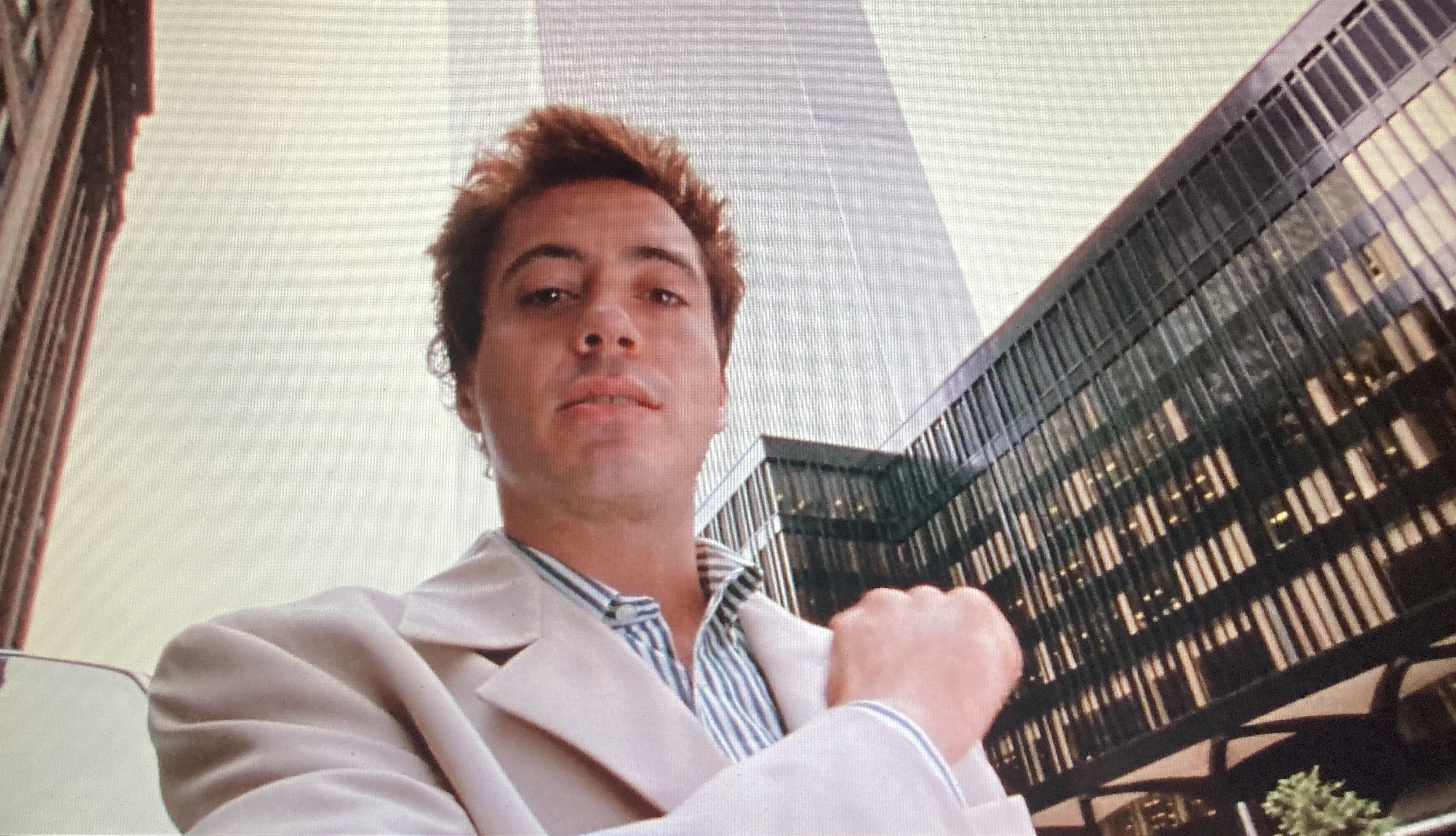
As the film’s tour guide, Downey presents himself more as a curious goofball than a political analyst, bouncing back and forth between the roles of investigative journalist and vaudeville comedian at the drop of a dime. Still shaking off the echoes of his Oscar nominated role in CHAPLIN, Downey pantomimes the silent film star’s physical humor throughout, viewing his role in THE LAST PARTY as a continuum of Chaplin’s artistry: “What interests me so much about Chaplin is not so much the fact that he was a comedic genius, but the fact that he seemed able to be a social critic and creative at the same time.”
As the film’s tour guide, Downey presents himself more as a curious goofball than a political analyst, bouncing back and forth between the roles of investigative journalist and vaudeville comedian at the drop of a dime. Still shaking off the echoes of his Oscar nominated role in CHAPLIN, Downey pantomimes the silent film star’s physical humor throughout, viewing his role in THE LAST PARTY as a continuum of Chaplin’s artistry: “What interests me so much about Chaplin is not so much the fact that he was a comedic genius, but the fact that he seemed able to be a social critic and creative at the same time.”
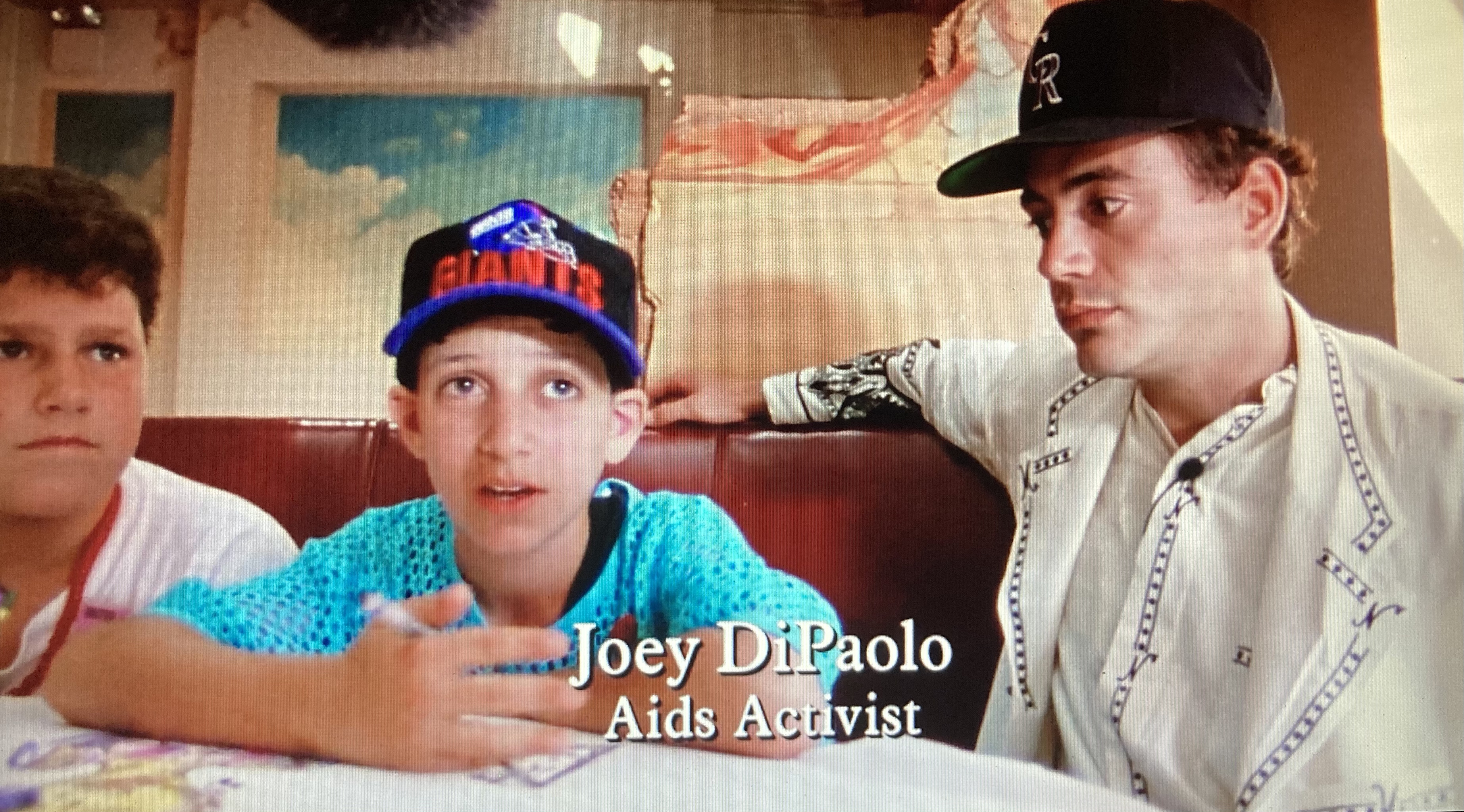
Freshly sober but teetering into a relapse, we see Downey meditating in front of the Statue of Liberty, playing bongos in a jam session, getting tarot card readings, and wandering through nature, barefooted and adorned with beaded necklaces. “There’s a movement in this country towards self realization, towards spirituality,” Patti Davis, the daughter of Ronald Reagan, tells Downey, “It’s come about out of crisis because we are a planet in crisis. We have this idea that we are a society in which a lot of dysfunctional family exists, but I think we’re missing the point that because of that, we are a dysfunctional country.”
The first half of THE LAST PARTY primarily takes place in New York City, where the Democratic National Convention is being held. But before heading to the DNC, we follow Downey through the agitated streets of the city.
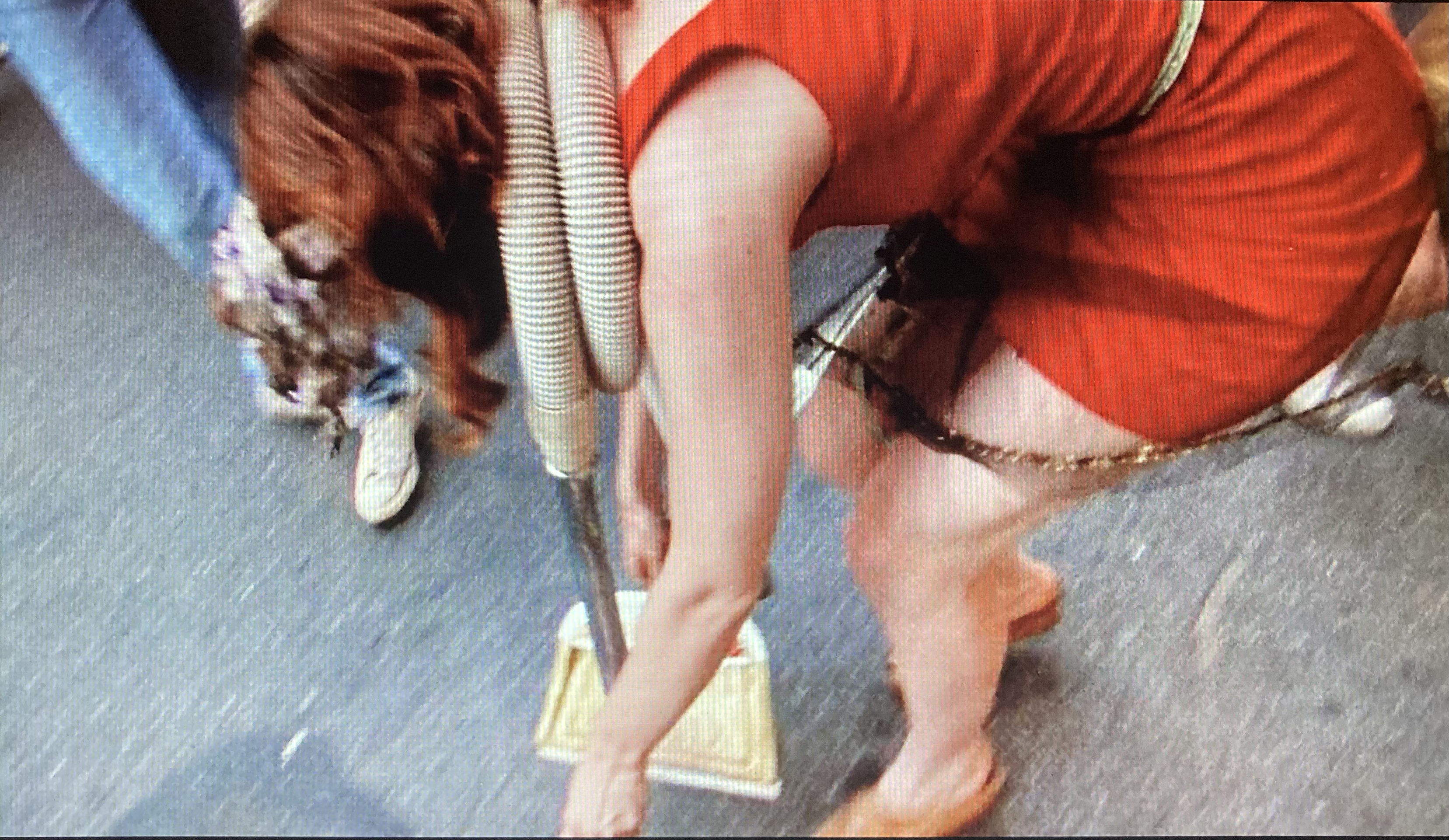
“George Bush, have no doubt, women want you OUT!” protestors chant at a women’s rights march, "Woman have to sweep the nation! After the house, clean the senate!”
A young woman marches, holding a stencil print sign, “I HAVE A VAGINA AND I HAVE AN OPINION.” Downey stops to ask, “What is your opinion?”
The first half of THE LAST PARTY primarily takes place in New York City, where the Democratic National Convention is being held. But before heading to the DNC, we follow Downey through the agitated streets of the city.
“George Bush, have no doubt, women want you OUT!” protestors chant at a women’s rights march, "Woman have to sweep the nation! After the house, clean the senate!”
A young woman marches, holding a stencil print sign, “I HAVE A VAGINA AND I HAVE AN OPINION.” Downey stops to ask, “What is your opinion?”
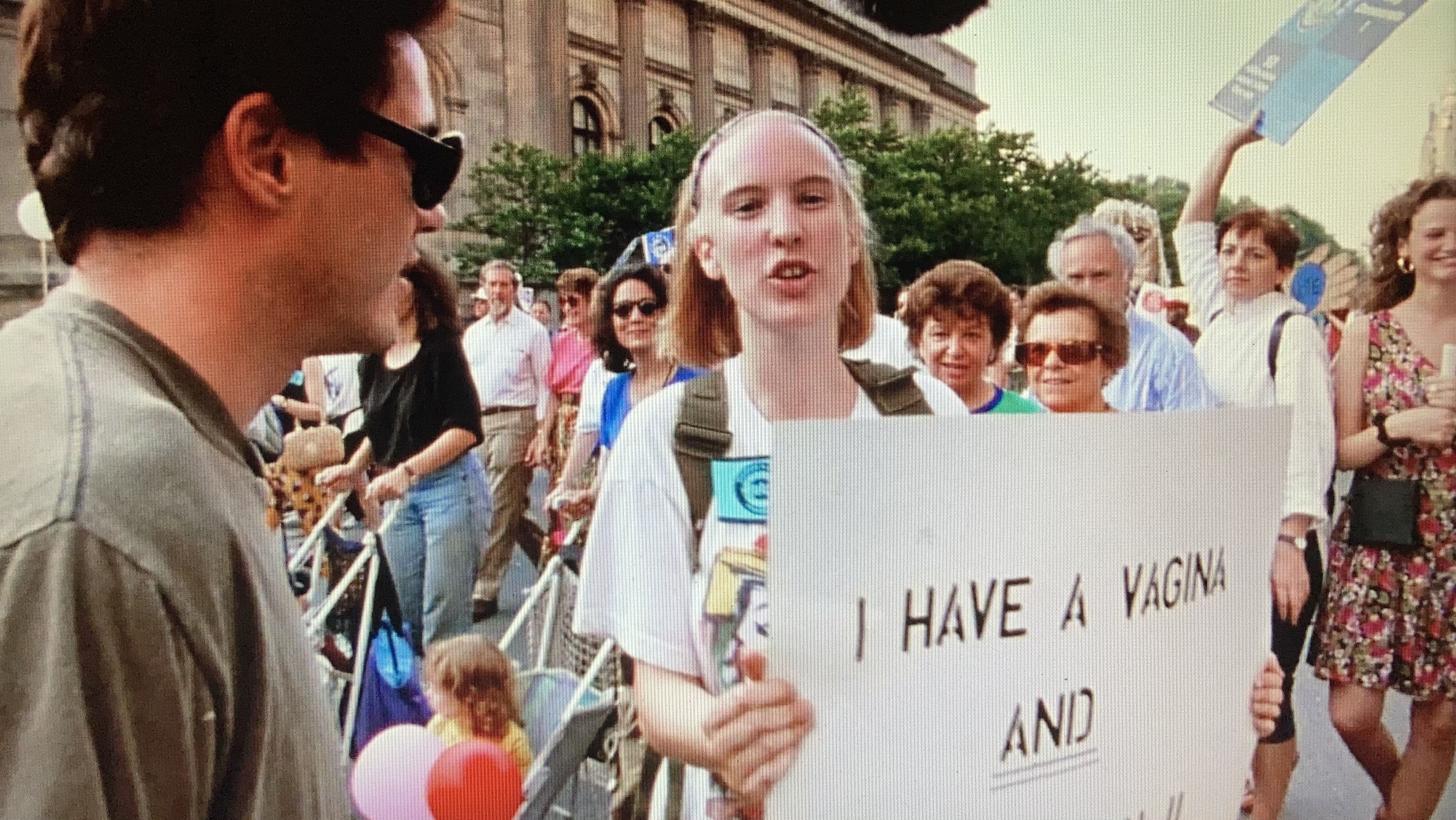
“My opinion is that everyone should have the right to choose. Unless you’re a straight white male, you’re basically fucked.”
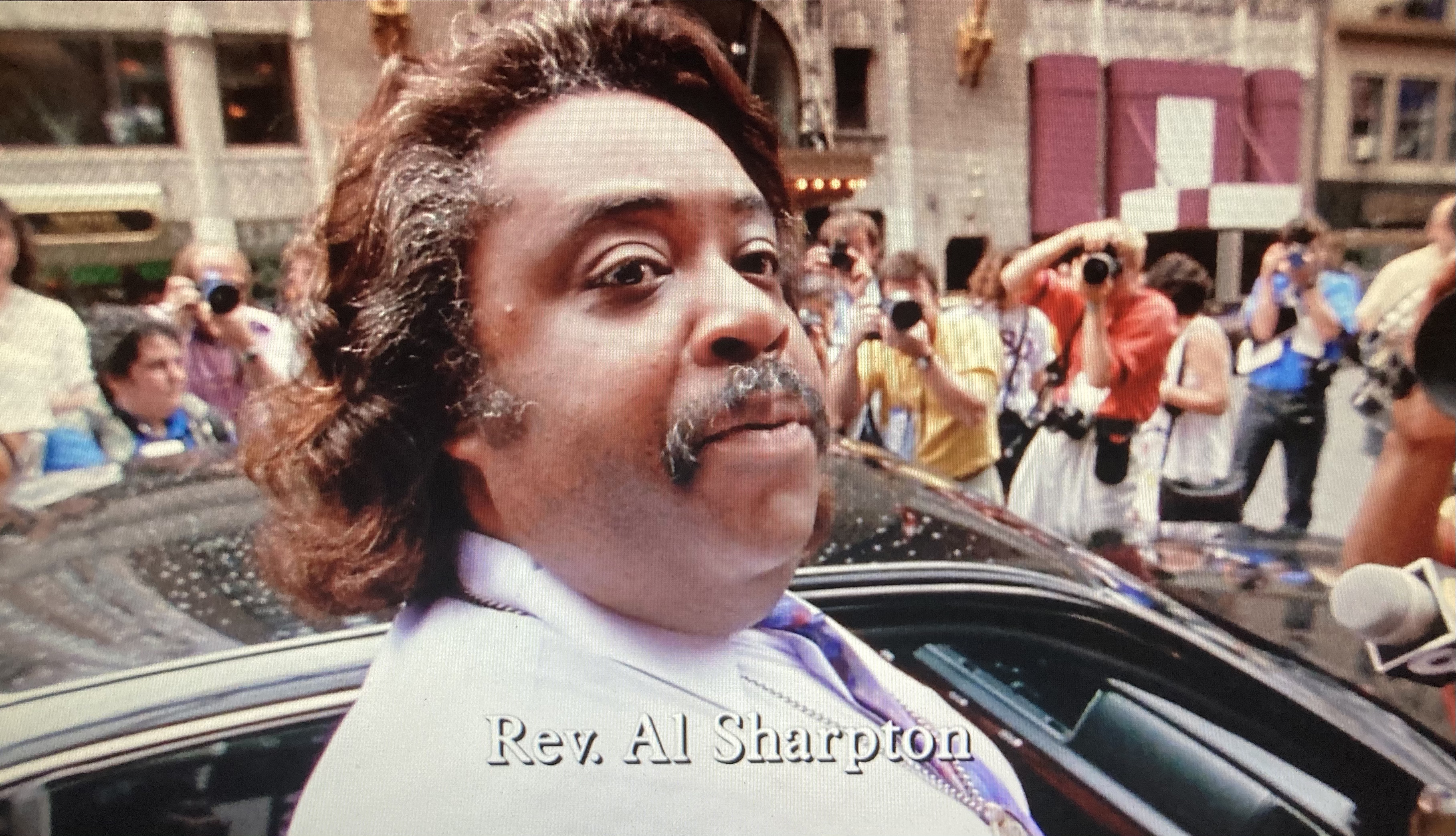
At another rally, a large crowd gathers in front of Rev. Al Sharpton, chanting in unison, “NO JUSTICE, NO PEACE” as Sharpton names off a list of black men who were killed by the NYPD. “If he [Clinton] wants to be president, he should be president of all the people and address all the issues: police brutality, criminal justice, racial violence,” Sharpton tells Downey. “I don’t want him to run on an economic plan and act like we don’t have criminal justice problems.” The 1992 election took place months after the Los Angeles riots, which occurred after Rodney King was savagely beaten by LAPD officers. Racial tensions in the country had reached a fever pitch.
At another rally, a large crowd gathers in front of Rev. Al Sharpton, chanting in unison, “NO JUSTICE, NO PEACE” as Sharpton names off a list of black men who were killed by the NYPD. “If he [Clinton] wants to be president, he should be president of all the people and address all the issues: police brutality, criminal justice, racial violence,” Sharpton tells Downey. “I don’t want him to run on an economic plan and act like we don’t have criminal justice problems.” The 1992 election took place months after the Los Angeles riots, which occurred after Rodney King was savagely beaten by LAPD officers. Racial tensions in the country had reached a fever pitch.
Fresh off of directing MALCOLM X, Spike Lee tells Downey, “Here in America, racism is interwoven into our fabric. When you talk about America, you talk about baseball, apple pie, and racism. And most of the time, racism is tied into economics.”
As groups of camera-shy NYPD officers flock the streets due to what they deem as “civil unrest,” Downey interviews a group of young black men about the riots that had recently occurred: “This whole place was like a war zone. Cars on fire, places were getting looted. Why? Because we all got fed up - fed up with the police state out here.”
Motioning to the NYPD officers down the block, Downey asks, “Do you think every one of those guys would fuck you up without thinking twice about it?”
As groups of camera-shy NYPD officers flock the streets due to what they deem as “civil unrest,” Downey interviews a group of young black men about the riots that had recently occurred: “This whole place was like a war zone. Cars on fire, places were getting looted. Why? Because we all got fed up - fed up with the police state out here.”
Motioning to the NYPD officers down the block, Downey asks, “Do you think every one of those guys would fuck you up without thinking twice about it?”
“Hell yeah,” a young black man replies, “They’re on a power trip.”
“Do you think these riots help or hurt?” Downey asks a graffiti artist.
“I think it hurts ourselves to be burning down our own neighborhoods and looting our own stores, but I understand the frustration of the people. You talk and write your congressman and do all the things you’re supposed to do in a democratic society and it doesn’t work - especially for minorities.”
In between black and white footage of the pandemonium surrounding the election, THE LAST PARTY takes us through the Democratic National Convention at Madison Square Garden. As Clinton speaks political platitudes to an uproarious crowd, the film cuts to a plethora of monitor screens, broadcast panels, political correspondents, and camera men.
“Television is our public airwaves,” Oliver Stone, writer and director, tells Downey amidst the media frenzy at the DNC, “But they’ve been leased to the twenty-three corporations that control America. So there’s no way you can have a serious debate, a serious discussion, a serious campaign...it takes cataclysmic events to really rock us out of the complacency and hypocrisy that we see here today.”
Backstage at the DNC, Downey holds court in a celebrity packed green room as comedian Richard Lewis confesses, “I flew three thousand miles for Clinton and I saw the way we were, okay? How’s that?”
“Do you think these riots help or hurt?” Downey asks a graffiti artist.
“I think it hurts ourselves to be burning down our own neighborhoods and looting our own stores, but I understand the frustration of the people. You talk and write your congressman and do all the things you’re supposed to do in a democratic society and it doesn’t work - especially for minorities.”
In between black and white footage of the pandemonium surrounding the election, THE LAST PARTY takes us through the Democratic National Convention at Madison Square Garden. As Clinton speaks political platitudes to an uproarious crowd, the film cuts to a plethora of monitor screens, broadcast panels, political correspondents, and camera men.
“Television is our public airwaves,” Oliver Stone, writer and director, tells Downey amidst the media frenzy at the DNC, “But they’ve been leased to the twenty-three corporations that control America. So there’s no way you can have a serious debate, a serious discussion, a serious campaign...it takes cataclysmic events to really rock us out of the complacency and hypocrisy that we see here today.”
Backstage at the DNC, Downey holds court in a celebrity packed green room as comedian Richard Lewis confesses, “I flew three thousand miles for Clinton and I saw the way we were, okay? How’s that?”

“Was Clinton your first choice?” Downey asks.
“What other choice is there!?” Lewis responds, “It’s like voting for Alf! There’s no one else. C’mon!”
Downey also sits down with John Kerry, who strongly criticized President Bush for misleading the country after the invasion of Iraq: “Our government lies. It’s extraordinary the degree to which they’ll classify information in the name of embarrassment or political ideology and avoid telling the American people the truth.”
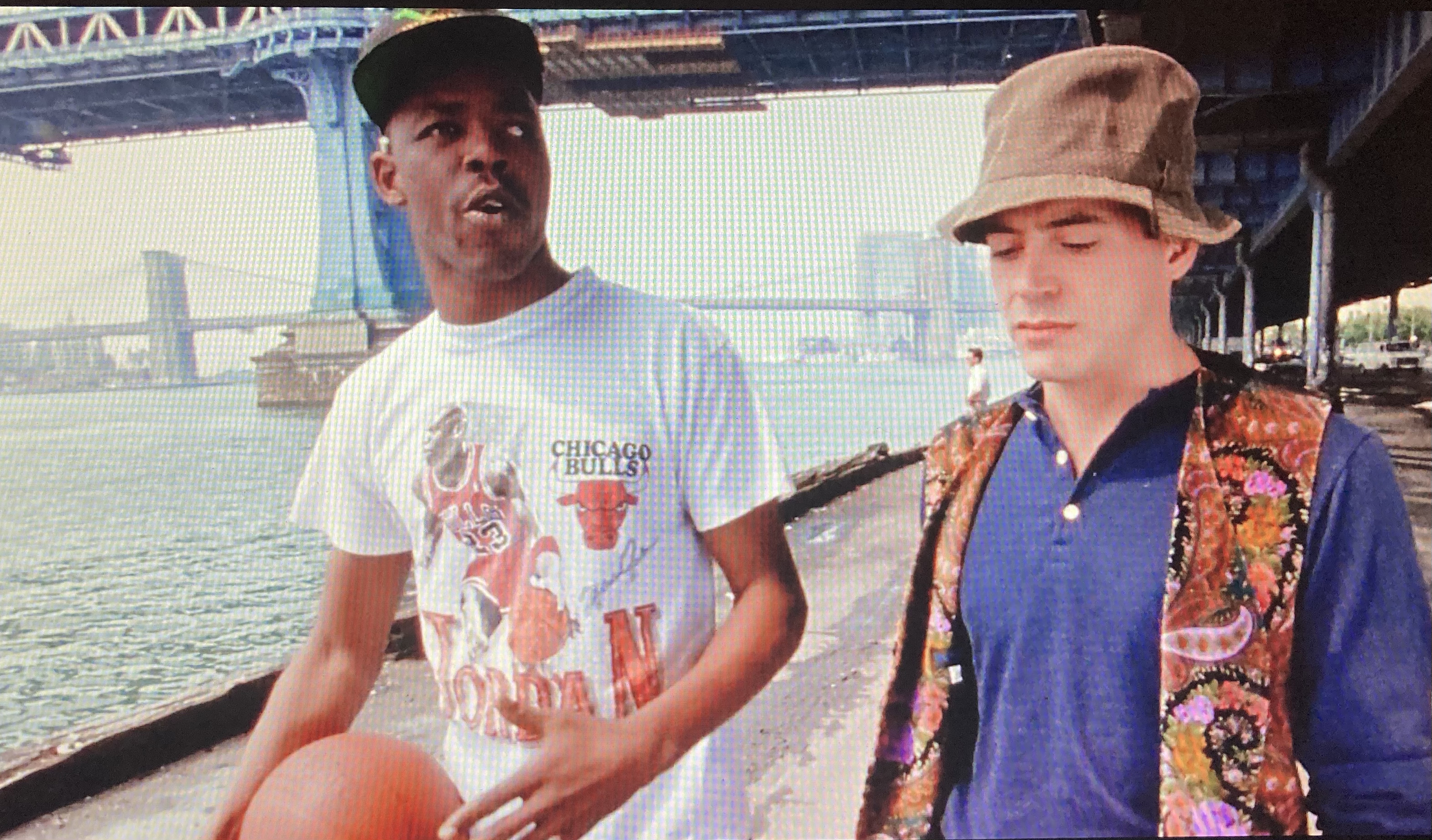
Before THE LAST PARTY transitions to the Republican National Convention, it takes a brief detour into the conspiratorial. Downey speaks with self-proclaimed pundits operating on the political fringes; theorists who have zoomed out from the two party system governing America, focusing on a hidden new world order that controls the globe. Whether it be the illuminati, aliens, or inter-dimensional species, what is clear to them is that the government is lying about what’s really going on, and the media is trying to distract the public from the truth.
When Downey arrives in Houston, he stops at a Bush rally, speaking to a group of young republican voters about the main issues concerning them, as well as the failure of mainstream media to accurately represent republican values: “To me, PC culture and liberalism is more stringent, more vindictive, and more dangerous than McCarthyism could’ve ever been and ever was,” a woman tells Downey, prompting an explosion of applause.
When Downey arrives in Houston, he stops at a Bush rally, speaking to a group of young republican voters about the main issues concerning them, as well as the failure of mainstream media to accurately represent republican values: “To me, PC culture and liberalism is more stringent, more vindictive, and more dangerous than McCarthyism could’ve ever been and ever was,” a woman tells Downey, prompting an explosion of applause.
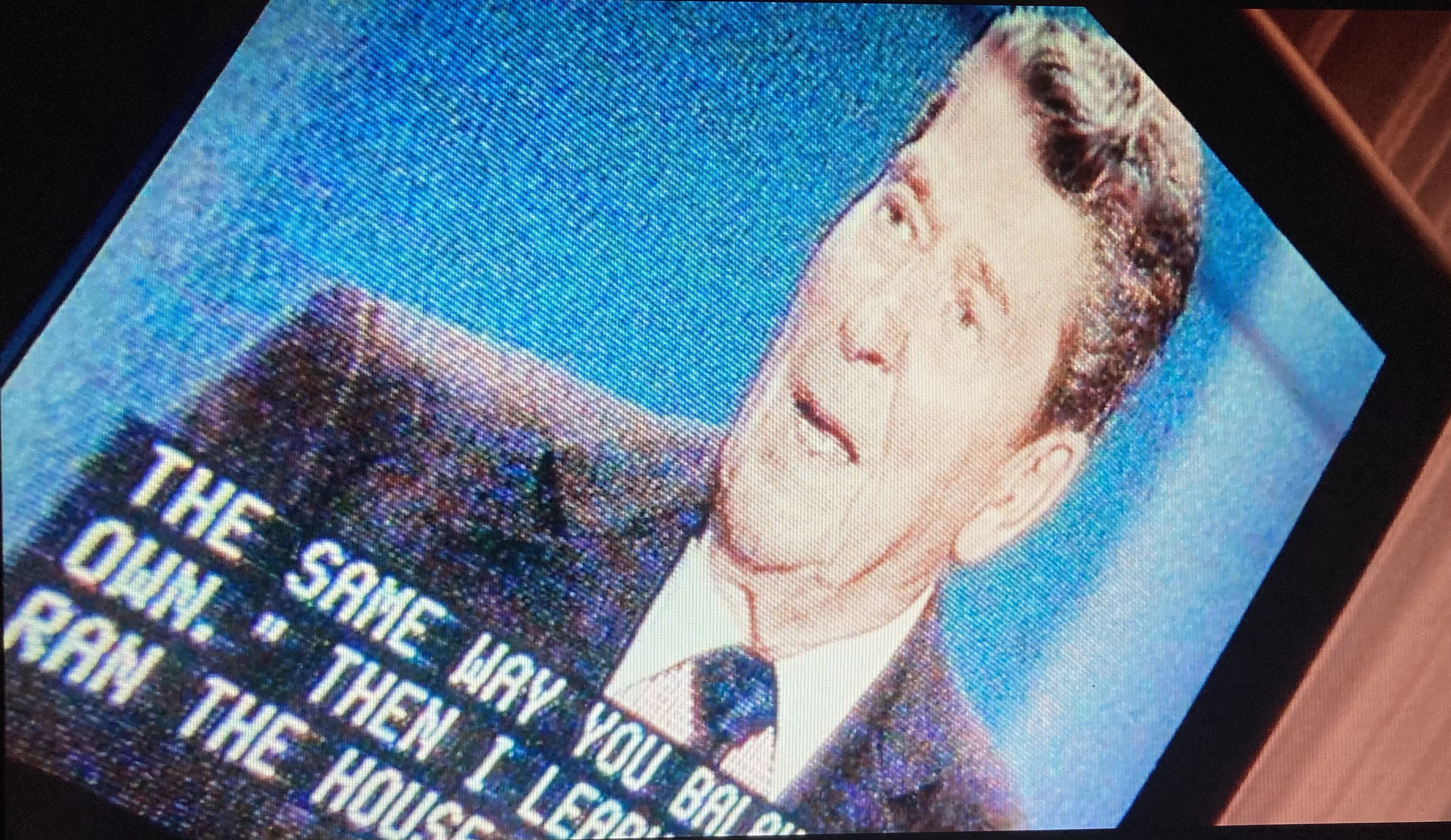
Arriving at The Astrodome for the RNC, Downey browses through a merch table in the lobby, filled with posters of a young Ronald Regan from his Hollywood days with a noose tied around his neck, the caption reading, “STOP THE LIBERAL MEDIA LYNCH MOB!” These posters are surrounded by a variety of “I DON’T BELIEVE THE LIBERAL MEDIA” bumper stickers and “CBS: RATHER BIASED” decals. Much of this merchandise is made by Accuracy In Academia, a non-profit organization seeking to counter what it sees as liberal biases in the media.
Speaking to a packed Astrodome, Pat Buchanan proclaims, “Like many of you last month, I watched that giant masquerade ball at Madison Square Garden, where twenty- thousand liberal radicals came dressed up as moderates and centrists in the greatest exhibition of cross dressing in American political history...this is a cultural war...this war is for the soul of America.”
In quite possibly the most prophetic moment of THE LAST PARTY, Downey summarizes his trips to the DNC and the RNC by saying, “America’s new enemy is its own: the liberals, the media, homosexuals, minorities, woman who want to be empowered. The new American enemy is the other Americans.”
Speaking to a packed Astrodome, Pat Buchanan proclaims, “Like many of you last month, I watched that giant masquerade ball at Madison Square Garden, where twenty- thousand liberal radicals came dressed up as moderates and centrists in the greatest exhibition of cross dressing in American political history...this is a cultural war...this war is for the soul of America.”
In quite possibly the most prophetic moment of THE LAST PARTY, Downey summarizes his trips to the DNC and the RNC by saying, “America’s new enemy is its own: the liberals, the media, homosexuals, minorities, woman who want to be empowered. The new American enemy is the other Americans.”
On election night, Downey is at home with his family, watching the news coverage. Upon winning the election, Clinton announces to television sets across America, “With high hopes, brave hearts, and massive numbers, the American people have voted to make a new beginning.”
The rest is history.
Historically, America has always had a short term memory. We’re quick to forget our recent past in favor of whatever the present crisis is, failing to realize that there is much to be learned from our previous shortcomings in order to build a more harmonious future. With this in mind, THE LAST PARTY is both a cultural time capsule and a disheartening case of déjà vu.
The rest is history.
Historically, America has always had a short term memory. We’re quick to forget our recent past in favor of whatever the present crisis is, failing to realize that there is much to be learned from our previous shortcomings in order to build a more harmonious future. With this in mind, THE LAST PARTY is both a cultural time capsule and a disheartening case of déjà vu.
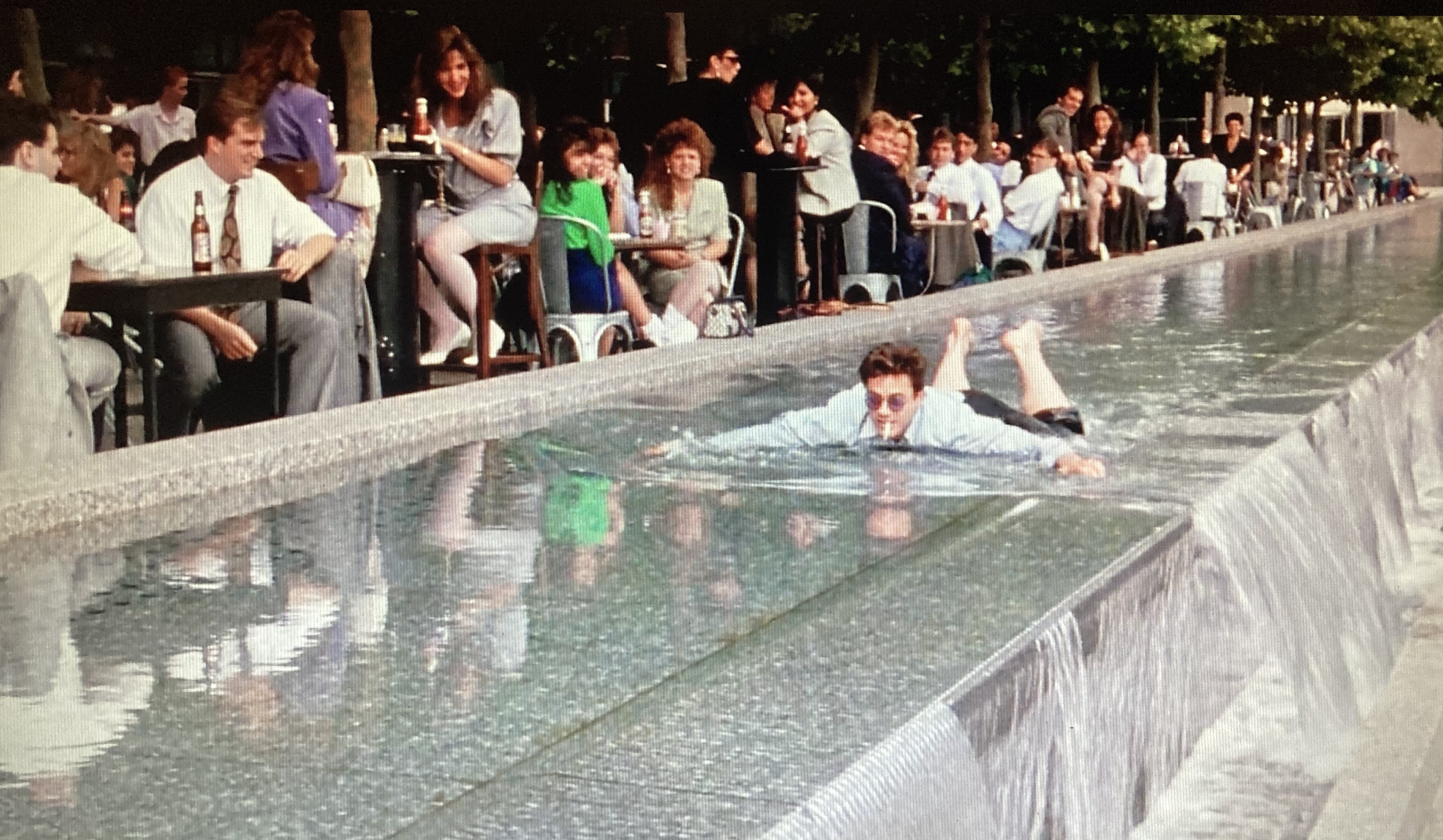
The criticism against THE LAST PARTY is fair. It’s biased and liberally skewed in its design: a famous actor born out of the Hollywood machine, a town and industry that has always prided itself on its progressivism, attempts to use his star-power to make a documentary about politics. How objective can it possibly be? But rather than condemn THE LAST PARTY for its flaws, we should view it as a cinematic artifact to learn from. Close to thirty years later, why have none of the societal issues highlighted in the film changed? And how can we bring about real change moving forward?
2020 has been a hellacious year, capsized by a global pandemic that ravaged America, exposing the faulty foundation of our government and sending our society into a manic disseverance. It’s inherently unfair to compare 1992 to 2020. Both years have been painted by their own circumstantial colors, reflective of their own unique time and place. But after viewing THE LAST PARTY, it’s hard to deny that both years have similar shades and textures, utilizing the same brush and easel we’ve been using to create American history for generations. And even more so than the canvas, emphasis should be placed upon the frame in which he hold this American mosaic, and where we choose to mount it within the walls of our shared cultural zeitgeist.
2020 has been a hellacious year, capsized by a global pandemic that ravaged America, exposing the faulty foundation of our government and sending our society into a manic disseverance. It’s inherently unfair to compare 1992 to 2020. Both years have been painted by their own circumstantial colors, reflective of their own unique time and place. But after viewing THE LAST PARTY, it’s hard to deny that both years have similar shades and textures, utilizing the same brush and easel we’ve been using to create American history for generations. And even more so than the canvas, emphasis should be placed upon the frame in which he hold this American mosaic, and where we choose to mount it within the walls of our shared cultural zeitgeist.
In contrast to 1992, a point in technological communication that was caught in-between the advent of a sleek device called the pager and the plastic receiver of a landline, our election year has been besieged by social media. Ranging from long-winded diatribes on Facebook to reductionist typography Instagram stories to two hundred and eighty-two character “full-stop” hot takes on Twitter, the consumption of these dopamine inducing digital platforms have exasperated our already fractured country, creating complex hives of indignation for our collective outrage to swarm around. We’re caught in an endless feedback loop that is as exhaustive as it is toxic.
It’s easy to retroactively judge the past through a modern lens. It’s in our nature to “monday morning quarterback” our way through the flaws of history as contemporary ideology deems so. It’s far more difficult to view people within the context of their time, to understand the cultural landscape that they revered and despised, to commit their successes and failures to memory so that yesterday does not become tomorrow. There is much we can learn about our uncertain future by looking into our own certain past. THE LAST PARTY shows us where we have been, but what does it show about where we are going?
It’s easy to retroactively judge the past through a modern lens. It’s in our nature to “monday morning quarterback” our way through the flaws of history as contemporary ideology deems so. It’s far more difficult to view people within the context of their time, to understand the cultural landscape that they revered and despised, to commit their successes and failures to memory so that yesterday does not become tomorrow. There is much we can learn about our uncertain future by looking into our own certain past. THE LAST PARTY shows us where we have been, but what does it show about where we are going?